
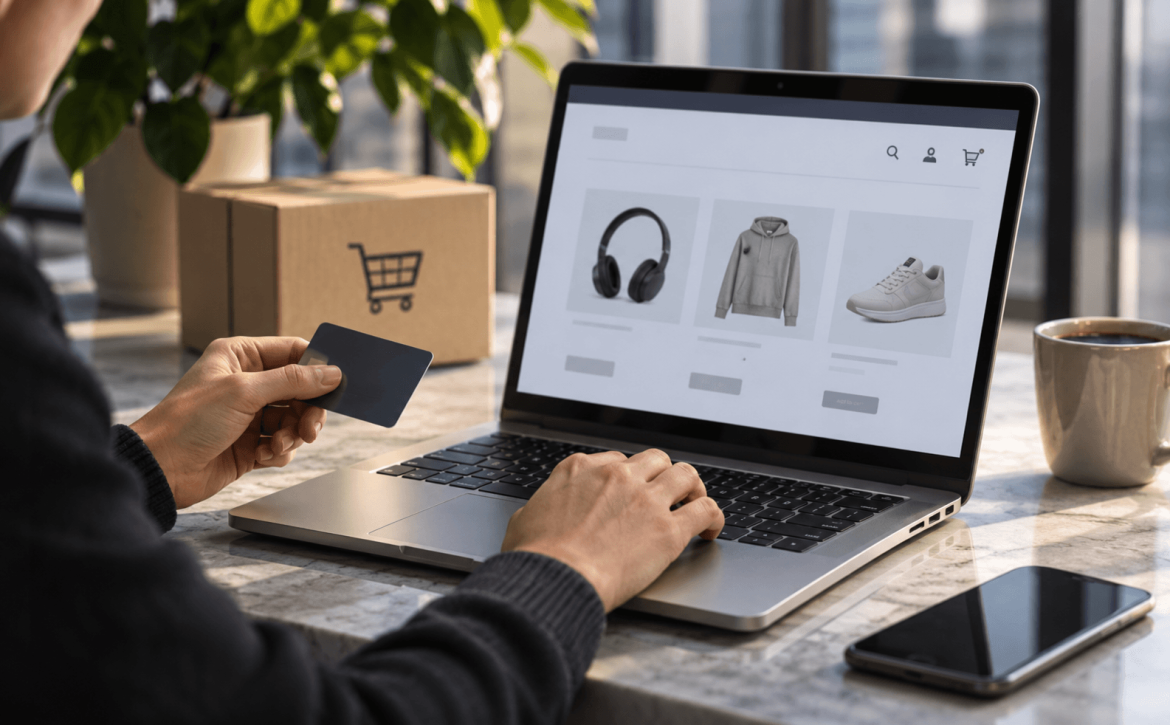
What is B2C

B2C (Business-to-Consumer) is a model in which a company sells products or provides services directly to individual consumers. B2C is widely used in e-commerce, retail, travel, entertainment, financial services, subscriptions, and digital platforms.
Unlike B2B, where the customer is another company, B2C focuses on individual customers. These relationships are often based on standardized pricing and terms, a high volume of smaller transactions, and specific consumer protection requirements.
B2C definition
B2C (Business-to-Consumer) is a commercial model in which a company interacts directly with an individual as the final buyer of a product or service. The consumer purchases the product for personal use rather than for resale, production, or business operations.
B2C covers many formats, including:
- Online stores and marketplaces;
- Retail chains;
- Streaming and subscription services;
- Travel and hospitality services;
- Banking, insurance, and payment products;
- Mobile apps and digital platforms.
In simple terms
B2C means that a business sells directly to an individual. For example, an online store sells clothing to a customer, a bank offers a card to a consumer, and a streaming platform provides a subscription to a user.
How does B2C work?
In B2C, companies usually design sales around a large number of individual customers and a standardized customer journey. Consumers generally choose products, accept the applicable terms, and complete payment without lengthy negotiations.
A typical B2C transaction includes several stages:
- The consumer selects a product or service. This may happen in a store, app, website, or marketplace.
- The customer reviews the terms. Pricing, delivery terms, subscription rules, cancellation policies, and other key conditions should be available before purchase.
- Payment and delivery take place. The company receives payment and provides the product, digital access, or service.
- Post-sale obligations apply. Depending on the jurisdiction and product, these may include returns, refunds, warranties, complaints, or cancellation rights.
B2C companies usually do not negotiate each agreement individually. This makes clear and consistent terms and conditions, privacy notices, refund policies, and customer communications especially important.
Consumer protection in B2C
In B2C, companies deal directly with individuals, so these relationships are often subject to specific consumer protection rules. These rules may cover pre-contract information, advertising, payment practices, cancellation rights, refunds, warranties, and complaint handling.
B2C companies should pay particular attention to:
- Transparent pricing and additional fees;
- Clear terms and conditions;
- Fair return and refund policies;
- Protection of personal data;
- Advertising without misleading claims;
- Rules for subscriptions and automatic renewals;
- Accessible customer complaint procedures.
Specific requirements depend on the jurisdiction and type of product. Rules for e-commerce, financial services, and digital subscriptions, for example, may differ significantly.
Examples of B2C
B2C is used across almost every industry where companies deal directly with end users.
Example 1. E-commerce
An online store sells clothing or electronics directly to individuals through its website. The customer selects a product, pays for the order, and receives delivery without individually negotiating the terms.
Example 2. Subscription service
A streaming platform provides users with access to content through a monthly subscription. The B2C relationship may include pricing, renewal terms, cancellation rules, and payment processing.
Example 3. Financial services
A bank or fintech company offers an individual a payment account, card, or another financial product. In addition to commercial terms, these relationships may be subject to additional consumer protection and regulatory requirements.
Example 4. Travel services
An airline, hotel, or booking platform sells a service directly to a traveller. The applicable terms commonly cover payment, cancellation, refunds, and the parties’ responsibilities.
B2C vs B2B
B2C and B2B differ mainly in the type of customer and the nature of the commercial relationship. In B2C, a company sells to an end consumer, while in B2B, it sells to another business.
|
Feature |
B2C |
B2B |
|
Customer |
Individual consumer |
Company or organization |
|
Sales cycle |
Usually shorter |
Often longer |
|
Pricing |
Usually standardized |
May be individually negotiated |
|
Contracts |
Usually standard terms |
Often detailed negotiated agreements |
|
Transaction value |
Usually lower |
Often higher |
|
Decision-making |
Usually one customer |
May involve several decision-makers |
|
Consumer protection |
Usually applies |
Generally limited or not applicable |
The main difference is that B2C focuses on individual consumers and is therefore often subject to additional consumer protection requirements. B2B relies more heavily on negotiated commercial terms and contractual risk allocation.
Frequently Asked Questions
What does B2C mean?
B2C (Business-to-Consumer) means a model in which a company sells products or services directly to end consumers.
What companies use the B2C model?
B2C businesses include online stores, retailers, streaming services, airlines, hotels, banks, fintech apps, and other companies serving individual customers.
Do B2C companies need terms and conditions?
Yes. For many B2C businesses, terms and conditions help define payment, delivery, service use, cancellation, refunds, and other key customer rules.
What is the difference between B2C and D2C?
B2C describes sales from a business to consumers in general. D2C (Direct-to-Consumer) usually refers to a manufacturer or brand selling directly to the end customer without traditional intermediaries.
What are common B2C risks?
Common risks include misleading advertising, unclear pricing, refund disputes, privacy violations, unfair contract terms, and failure to meet consumer protection requirements.
Key takeaways
- B2C (Business-to-Consumer) is a model in which a company sells products or services directly to an end consumer.
- B2C is widely used in e-commerce, retail, subscriptions, travel, fintech, and digital services.
- B2C commonly involves standardized pricing, shorter sales cycles, and a high volume of individual transactions.
- Consumer protection, clear terms, refunds, privacy, and accurate customer communications are particularly important in B2C.
- B2C differs from B2B because the customer is an individual rather than another company.
Please fill in the form and we will get in touch with
you as soon as possible
